Claude vs ChatGPT: Which fits your Business Best?
Claude and ChatGPT both exclude business data from training. Where data is stored, and what admins can control, is what separates them.

Claude and ChatGPT are close enough on what they can do that choosing between them rarely turns on how well either one writes. It turns on two practical questions: where a business’s data is allowed to sit, and what an administrator can switch on, restrict and audit once forty people are using the tool. On the first, the two providers give different answers, and on a European business’s compliance file that difference can matter more than any feature.
This review sets out what each product covers, what each provider states about training, retention and data location, what administrators can control, how each connects to a company’s own documents, and which type of organisation fits which. Every claim about a provider comes from its own published documentation, listed under Sources, and the review says where a point could not be confirmed.
Key takeaways
- Both providers state that business data is excluded from model training by default, so training exposure does not separate them.
- Data location does. OpenAI offers European data residency for ChatGPT Enterprise and Edu. Anthropic states that Claude’s own products store data in the United States, with a choice over where traffic is routed.
- Claude’s published admin tooling is detailed: single sign-on, role-based access, audit logs, custom retention and customer-managed keys on Enterprise.
- Both hold SOC 2 and ISO 27001 and ISO 42001, so certifications are not the deciding factor.
- Neither connects to a company’s documents without an administrator turning it on, which makes access settings the real control.
- The honest starting point is a data-location requirement, not a model preference.
What “Claude” and “ChatGPT” cover for a Business
Each name covers more than one thing, and a comparison that skips this compares the wrong pair. Claude is Anthropic’s assistant, reached through a web and desktop app, through the API, and through Anthropic’s models running on other companies’ cloud platforms. For organisations, the apps come in a Team plan and an Enterprise plan. Anthropic’s documentation states that the Team plan requires a minimum of two members and runs up to 150 seats before an organisation must move to Enterprise, which gives a rough sense of where each one is aimed. Both assistants sit on a large language model, and the model matters less to a buyer than the plan wrapped around it.
ChatGPT is OpenAI’s assistant, reached through its own app and through the API. Its business tiers are Business, Enterprise and Edu, and the API platform sits alongside them with its own terms. As with Claude, the line that matters is between the plans an organisation administers and the personal plans an employee might be using on their own account. Both providers treat those two groups under different terms, which is why the first question for any rollout is whether staff are on managed accounts or personal ones.
That difference is easy to miss and expensive to discover late. An employee pasting client material into a personal account of either tool is not covered by the commercial commitments described below, because those commitments belong to the business plans. It is one reason why banning AI tools at work does not work: giving people a managed account is what brings their use under the stronger terms.
Claude
Apps for organisations: Team and Enterprise
Also reached through the API and other cloud platforms
Stored in the US; traffic routing can be chosen
Admin tooling documented in detail
ChatGPT
Business, Enterprise and Edu plans, plus the API
Its own app and API, with its own terms
European data residency for Enterprise, Edu and the API
Training excluded by default on business plans
What each provider states about your Data
Start with training, because it is the question most buyers ask first and the one with the least difference. Anthropic states that it does not use inputs or outputs from its commercial products, which it lists as Team, Enterprise and the API, to train its models. The one carve-out it names is feedback: if a user submits a thumbs up or thumbs down on a conversation, Anthropic may use that conversation for training. OpenAI’s equivalent commitment covers ChatGPT Business, Enterprise, Edu and the API platform. None of them use submitted content to train or improve its models unless the customer opts in to share data. Both providers therefore reach the same default by different wording, and a business that wants a firm answer should read the carve-outs, not only the headline.
Retention is where Anthropic’s documentation is most specific. It states that API inputs and outputs are deleted automatically within 30 days, except where a customer has chosen a longer period, a contract says otherwise, or the law requires it. For products that keep conversation history, such as the Team and Enterprise apps, the organisation controls retention and deleted conversations leave backend systems within 30 days. Enterprise plans can configure custom retention, and organisations can agree zero data retention terms for specific products. Anthropic also notes longer retention in defined cases, for example where a conversation breaches its usage policy. A buyer should ask what each provider’s equivalent settings are for the plan under consideration, because retention is set by plan and contract, not by the brand.
Location is where the two diverge. OpenAI states that eligible customers on ChatGPT Enterprise, Edu and the API platform can choose data residency in Europe, and that content can then be stored at rest in the region, including conversations in Enterprise and Edu workspaces. Anthropic’s privacy centre says that while traffic can be routed to select countries in the US, Europe, Asia and Australia, data is stored in the United States. Its developer documentation is consistent with that: the storage setting, called workspace geo, currently offers the United States only, and the per-request inference setting offers US-only or global processing. Anthropic does describe regional data residency across Europe, but for Claude deployed through the regional offerings of the major cloud platforms, not for the Claude apps and API as sold directly.
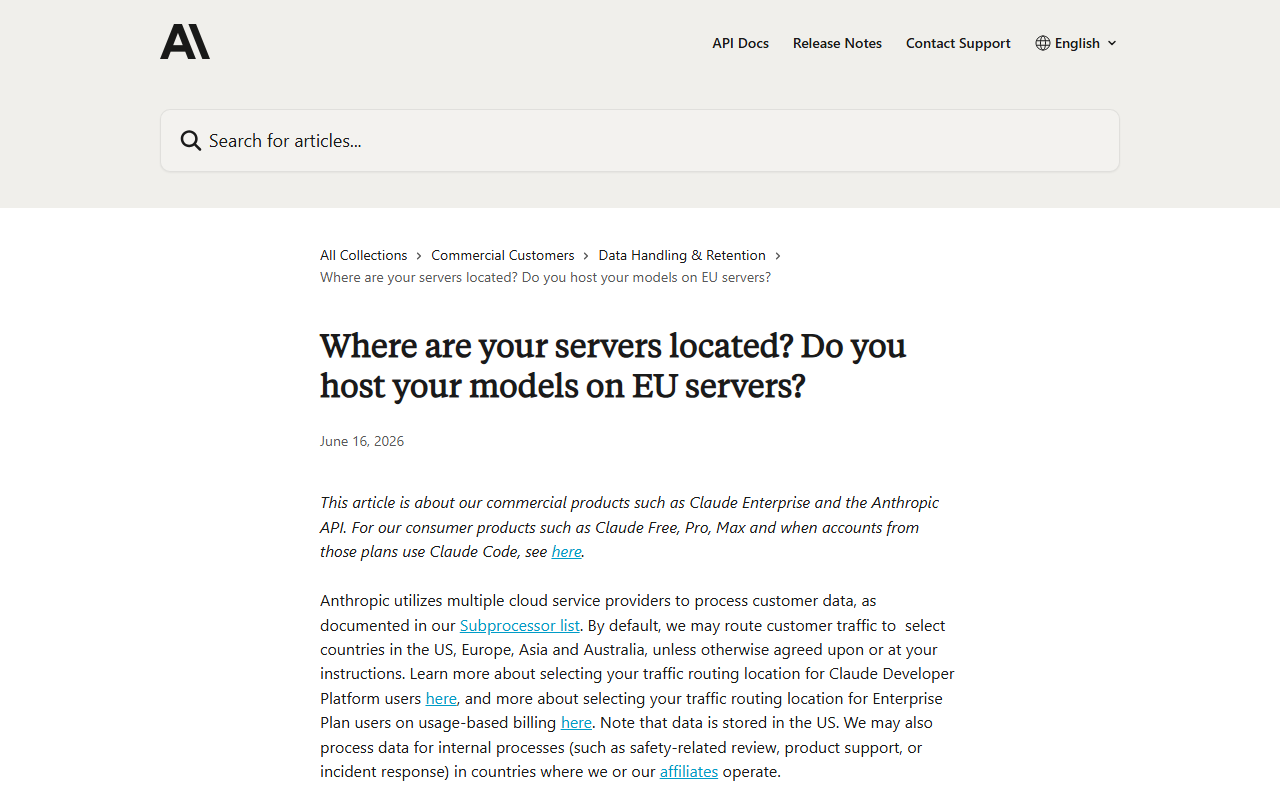
For a European organisation, this is the practical difference between the two. It does not make either unusable. Transfers outside the EU can be lawful when the right safeguards are in place, and that is a matter for your data protection officer, not for this review. But a business whose policy says personal data stays in the EU has a direct answer from one provider and a different route to take with the other. If that policy is yours, settle it before comparing features.
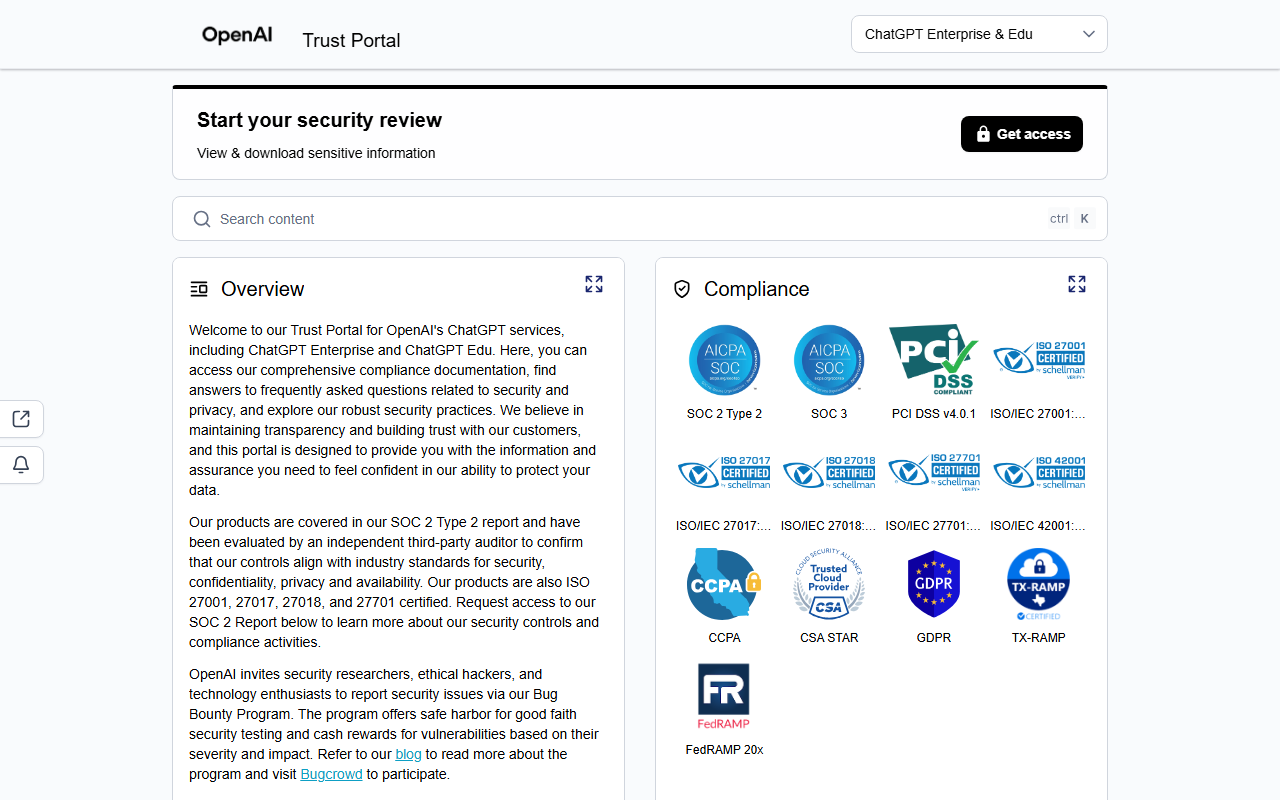
Certifications, which sit alongside location, point the other way and show little separation. Anthropic states SOC 2 Type I and Type II, ISO 27001:2022 and ISO/IEC 42001:2023, with a HIPAA-ready configuration and a business associate agreement available. OpenAI’s trust portal lists SOC 2 Type 2, SOC 3, ISO/IEC 27001, 27017, 27018, 27701 and 42001, among others. Both cover the main security and AI-management standards. A certification describes the provider’s own controls. Whether your use of the tool meets your duties under data protection law is a separate question that no certificate answers on your behalf.
What an administrator can Control
This is the section where the quality of the public documentation differs most, so it is worth being plain about what could and could not be confirmed.
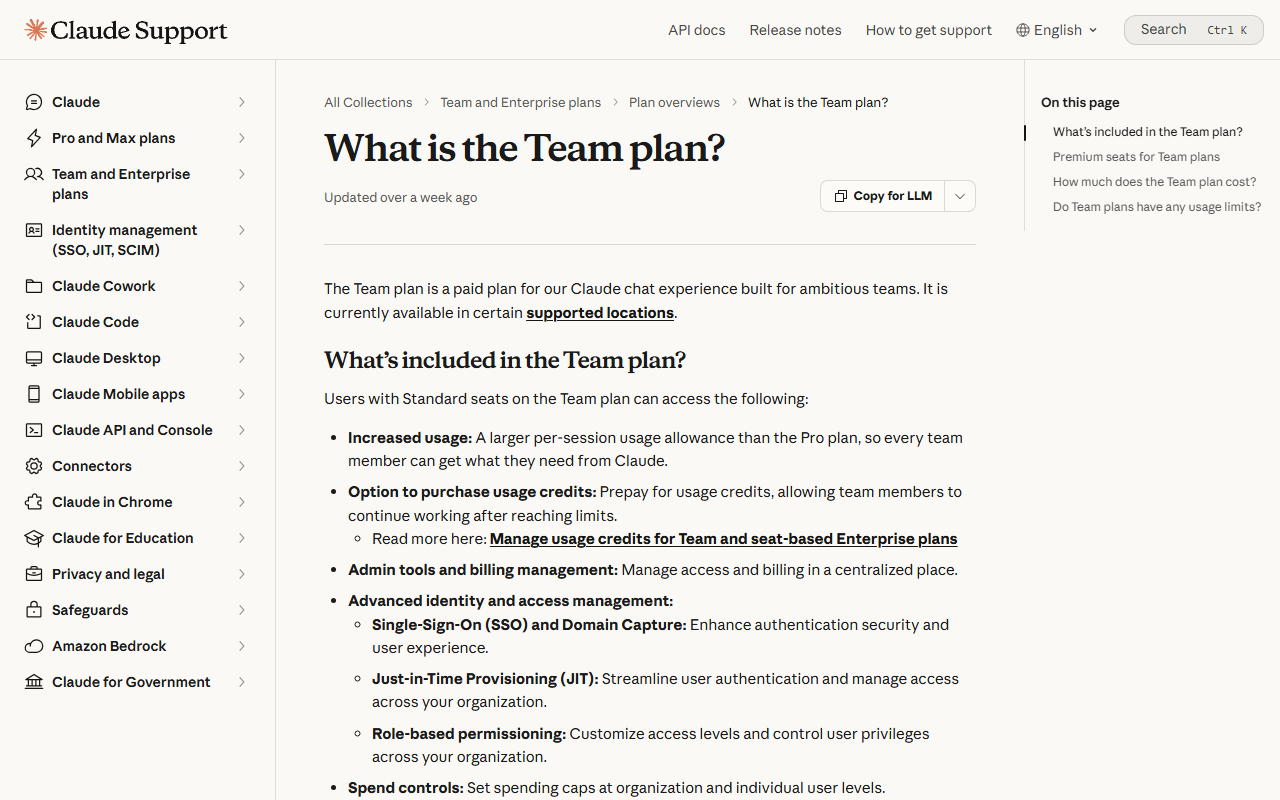
Anthropic publishes a detailed list. The Team plan includes single sign-on with domain capture, just-in-time provisioning, role-based permissions, and spend controls at both organisation and individual level. Enterprise adds SCIM provisioning, audit logs, a compliance API and an analytics API for adoption figures, custom data retention, customer-managed encryption keys, IP allowlisting and network-level access control, and per-tool permissions on connectors. For an IT team writing a rollout checklist, that is a document it can tick against.
For ChatGPT, the certifications and residency commitments above are well documented, and OpenAI’s documentation describes projects, an agent mode and a browser for Enterprise. This review could not retrieve OpenAI’s own page listing the admin features of each plan, so it does not claim a feature-by- feature match with the list above. It would be a mistake to read that gap as a weakness in the product. It means the comparison of admin controls is the step a buyer must do from the vendor’s current plan page, with the specific tier in hand, instead of from any third-party summary, including this one.
Two controls deserve attention whichever tool is chosen, because they decide real outcomes more than the headline feature list does. The first is spend: usage-based limits stop a pilot becoming an unexpected line on a budget. The second is who may connect the assistant to which systems. A tool that can read a shared drive can surface a document the user never knew existed, if that user technically had access to it. Tidying permissions before connecting anything is dull work and it prevents most of the awkward incidents. A short AI governance policy that names an owner for each tool settles who approves a new connection.
Working with your own Documents
Both tools are strongest when they answer from material you give them rather than from general knowledge, which is the idea behind grounding. The difference is in how each is wired to a company’s content.
Anthropic’s Team plan includes connectors to workplace tools, covering document storage, email, calendars, code repositories, office suites and team chat, so that the assistant can search documents, email, calendars and team messages. It also provisions a shared search project for all members, and projects that hold shared context for a team. Enterprise adds custom connectors built on the Model Context Protocol, an open standard for linking assistants to other systems, plus skills that encode a team’s workflows and templates. ChatGPT offers projects and connected-app options of its own, and the API supports the same pattern of building a product around the model.
In both cases the assistant sees what an administrator connects, no more. That makes this a governance decision first and a feature decision second. A useful test is to pick one real task, such as answering a customer question from three internal documents, and run it on both tools with the same source material. The result says more about fit than any feature comparison, and it shows quickly where the human checking step sits. Neither tool removes it, because a model can sound sure and still be wrong, which is what a hallucination is, and output bound for a customer needs a reader before it goes out.
Comparison at a glance
| Aspect | Claude (Team and Enterprise) | ChatGPT (Business and Enterprise) |
|---|---|---|
| Training on business data | Not by default; feedback submitted by a user is an exception | Not by default unless the customer opts in |
| Where data is stored | United States for Claude’s own products; traffic routing can be chosen | European residency available for Enterprise, Edu and the API |
| Retention controls | API data deleted within 30 days by default; custom retention and zero data retention terms on Enterprise and by agreement | Set by plan and contract; confirm for the tier in question |
| Certifications | SOC 2 Type I and II, ISO 27001, ISO 42001, HIPAA-ready | SOC 2 Type 2, SOC 3, ISO 27001, 27017, 27018, 27701, 42001 |
| Admin controls published | SSO, domain capture, role-based access, spend controls; SCIM, audit logs, compliance API, customer-managed keys on Enterprise | Not confirmed in this review; check the current plan page |
| Connecting to documents | Connectors, shared projects, custom connectors on Enterprise | Projects and connected apps, plus the API |
| Best fit | Teams that want detailed, documented admin control and can accept US storage or use a regional cloud route | Organisations that need European data residency for Enterprise, or are building on the API |
When Claude fits better
Claude fits an organisation that wants a documented, checkable admin framework from the start, particularly one that will connect the assistant to several workplace systems and wants per-tool permissions over those connections. It fits a business whose data-location policy can be met through transfer safeguards, or through running Claude on a cloud platform’s regional offering, so that US storage in the direct apps is not a blocker. It also fits teams that want to build their own workflows on open connector standards, and a smaller organisation can start on the Team plan before deciding whether Enterprise is needed.
When ChatGPT fits better
ChatGPT fits an organisation whose policy requires data to be stored at rest in the EU and that wants to meet that with the provider’s own residency option for an Enterprise or Edu workspace instead of a separate cloud route. It fits a business that already has staff using it and wants to bring that use under managed accounts, and one building a product on the API where the residency setting for the API platform applies. Because its admin feature list could not be confirmed here, a buyer in this position should read the current plan page for the tier and compare it line by line with the list above.
Which fits your organisation
Neither is the default correct answer, and the quickest way to a wrong choice is to start from which one sounds better in a demo. Start from the constraint: where must the data sit, and who needs to administer it. If the answer is the EU and a managed workspace, one provider answers directly. If the answer is detailed control over a connected rollout, the other publishes more to check against. Many organisations will find both are acceptable and the decision comes down to the ecosystem they already run, which is the question behind ChatGPT vs Copilot and the choice between a hosted assistant and a local model. Checking each candidate against what a real process handles is exactly what an audit is built to do, and once a tool is chosen, a core AI course on it turns the decision into something your people actually know how to use.
Further reading
- What an AI audit actually checks: the method behind choosing a tool against a real process.
- AI governance for small and mid-sized businesses: who owns a rollout and what they approve.
- What happens when nobody owns the AI you have rolled out: why admin controls only work with a named owner.
Sources
- Is my data used for model training? (Anthropic privacy centre): states that commercial products, Team, Enterprise and the API, are not used for training by default, with feedback as the exception.
- How long do you store my organisation’s data? (Anthropic privacy centre): API data deleted within 30 days by default, custom retention on Enterprise, zero data retention by agreement.
- Where are your servers located? (Anthropic privacy centre): traffic can be routed to select regions, data is stored in the United States.
- Data residency (Claude Platform docs): inference geo offers US-only or global, workspace geo currently offers the United States only.
- Regional compliance (Claude): regional residency in Europe through the cloud platforms’ own deployment options.
- What is the Team plan? (Claude support): seat limits, admin features, connectors and shared projects.
- What certifications has Anthropic obtained? (Claude support): SOC 2, ISO 27001, ISO 42001 and HIPAA-ready configuration.
- Claude Enterprise (Claude): identity, governance, data control and integration features of the Enterprise plan.
- Business data privacy, security and compliance (OpenAI): business plans and the API excluded from training unless a customer opts in.
- Introducing data residency in Europe (OpenAI): European data residency for ChatGPT Enterprise, Edu and the API platform.
- Expanding data residency access to business customers worldwide (OpenAI): the list of regions where residency is offered.
- Data residency and inference residency for ChatGPT (OpenAI documentation): what is stored at rest in the chosen region.
- OpenAI trust portal: certifications held by OpenAI’s business products.
FAQ
Questions we get asked
Does Claude train on Data from Team and Enterprise plans?
Not by default. Anthropic states that it does not use inputs or outputs from its commercial products, which include Team, Enterprise and the API, to train its models. The one exception it names is feedback: if a user submits a thumbs up or thumbs down on a conversation, Anthropic may use that conversation for training. Consumer plans are governed by separate terms, so the answer for a personal account is different.
Does ChatGPT train on Data from Business and Enterprise plans?
Not by default. OpenAI states that it does not use inputs or outputs from ChatGPT Business, Enterprise, Edu or the API platform to train or improve its models unless a customer explicitly opts in to share data. An organisation that never opts in stays excluded.
Can a Business keep its Data in the EU with Claude or ChatGPT?
The two differ here. OpenAI offers data residency in Europe for ChatGPT Enterprise and Edu workspaces and for the API platform, so content can be stored at rest in the region. Anthropic states that for Claude's own products data is stored in the United States, and that Enterprise and Developer Platform customers can choose where traffic is routed. Regional storage in Europe for Claude comes through deploying it on a cloud platform's own regional offering instead.
Which has stronger Security certifications, Claude or ChatGPT?
Neither holds a meaningful lead on paper. Anthropic states SOC 2 Type I and Type II, ISO 27001:2022 and ISO/IEC 42001:2023, with a HIPAA-ready configuration. OpenAI's trust portal lists SOC 2 Type 2, SOC 3, ISO/IEC 27001, 27017, 27018, 27701 and 42001. A certification describes the provider's controls, not whether your own use of the tool meets your legal duties.
Can Claude and ChatGPT both connect to a company's own Documents?
Claude's Team plan includes connectors to workplace tools such as cloud storage, email and team chat, plus projects that hold shared context, and Enterprise adds custom connectors built on the Model Context Protocol. ChatGPT offers projects and its own connected-app options. In both cases the assistant only sees what an administrator connects, so the access settings matter more than the tool.
Ready to Put This to Work?
Tell us where your team is with AI and we will tell you honestly what would make the biggest difference.